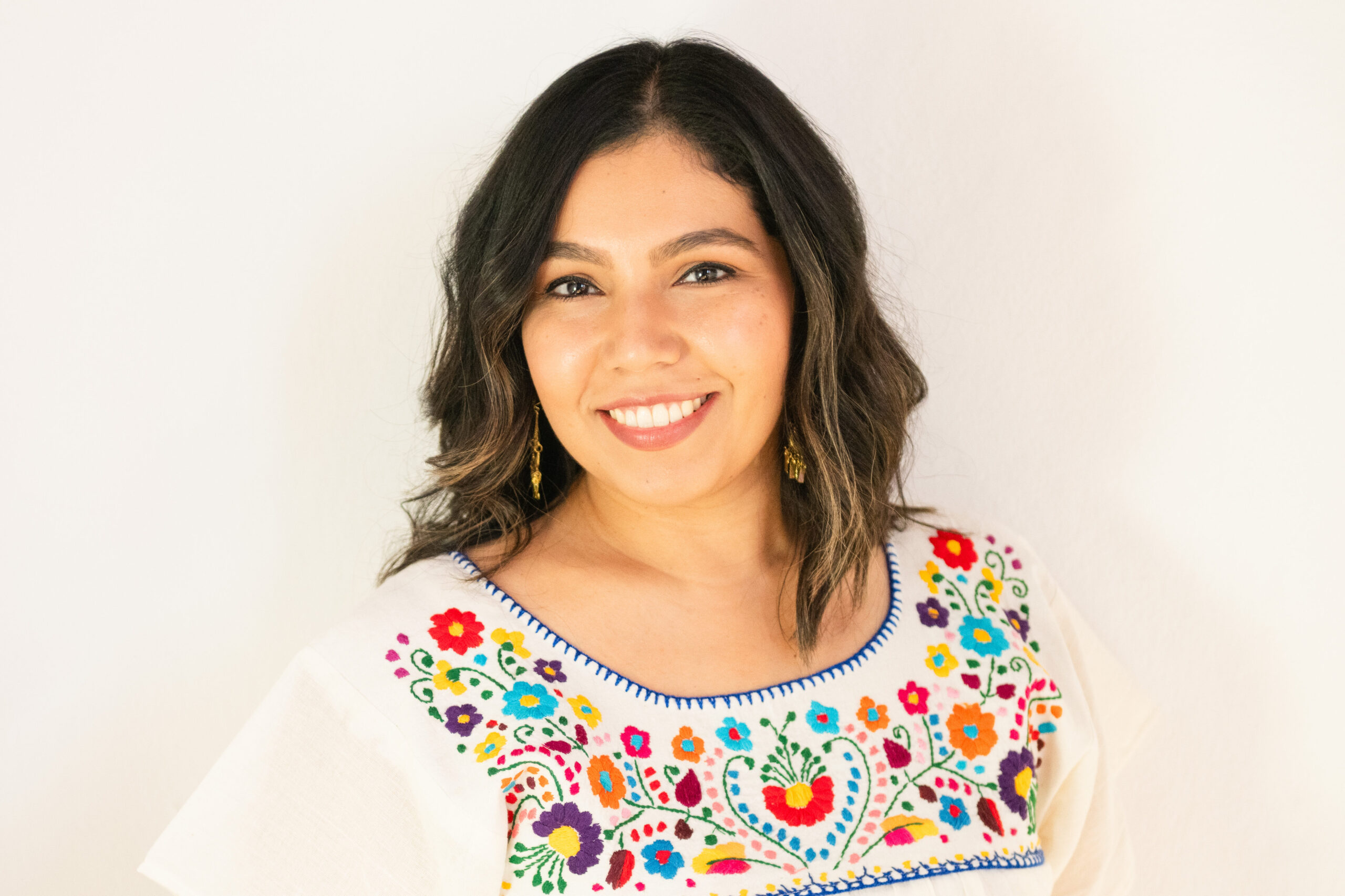
When Juda Avila shared that she didn’t feel an immediate emotional connection with her daughter after giving birth, even as she watched her own mother bond with the baby, I felt something shift in the conversation. Here was a licensed therapist, a postpartum coach, someone dedicated to maternal mental health, admitting what so many of us have felt but been too afraid to say: motherhood didn’t feel magical right away.
And that’s exactly why I wanted Juda on the Viva la Mami podcast.
The Weight of Words We Don’t Have
Juda and I talked about something she calls “silent grief”, a term I’d never heard before recording this episode, but one that immediately resonated. It’s the mourning of losses that aren’t always visible or acknowledged: the loss of time, identity, career opportunities, spontaneity, and even our pre-motherhood bodies and selves.
“Why can’t I just say, ‘I miss myself so much’?” Juda asked. “Or ‘I feel angry that I’m the fallback caregiver and have to put my career on hold’?”
The answer, she explained, lies in Marianismo – that cultural expectation passed down through generations that Latina women should be self-sacrificing, available 24/7, without feelings, without needs, without breaks. It’s the flip side of machismo, and it teaches us that being a “good mom” means disappearing.
This silent grief becomes even heavier because we lack the language to name it. When we don’t have words for what we’re experiencing, we assume our feelings are abnormal. We think we’re ungrateful, selfish, or broken for wanting more than motherhood offers.
Matrescence: The Transition No One Talks About
One of the most eye-opening parts of our conversation was when Juda introduced the concept of matrescence, a term coined in the 1970s but only recently gaining attention thanks to Dr. Alexandra Sacks’ TED Talk. Matrescence is the developmental transition into motherhood, as significant as adolescence, where women experience ambivalence, disorientation, and profound identity loss.
“It’s normal, it’s important, and it’s under-supported,” Juda emphasized.
Think about it: we have countless resources about baby development, pregnancy stages, and what to expect when expecting. But where are the resources about our development as mothers? Where’s the acknowledgment that we’re still evolving, still changing, still becoming – five years in, ten years in, twenty years in?
As a first-generation Mexican American who grew up as a parentified eldest daughter and later experienced homelessness with her family, Juda understands these struggles intimately. She knows what it means to navigate systems without a roadmap, to push through barriers, and to feel alone in experiences that should have community support.
Reframing Self-Care Without the Guilt
When Juda works with moms on self-care, many tell her they don’t even understand what the term means beyond basic hygiene routines. “I brush my teeth, I do my hair, I exercise, isn’t that self-care?” one client asked.
This is where Juda’s Self-Care Menu framework becomes transformative. She uses the analogy of a cup: we’re constantly pouring into our children, partners, households, careers, and communities. But when our cup is empty, what do we have to give? Nothing, or worse, anger and resentment.
The Self-Care Menu includes:
- The Appetizer (Daily): A non-negotiable daily activity that regulates you. For Juda, it’s taking a shower twice a day – the water on her skin helps regulate her nervous system. For you, it might be morning coffee, a walk, or ten minutes of silence.
- The Main Dish (Weekly): Something just for you, not involving your family. This requires more time and possibly childcare or planning. Maybe it’s working on a personal project for three hours or spending extra time at church connecting with community.
- Part Two of the Main Dish (Monthly): Activities that require more financial investment – getting your eyebrows done, a massage, investing in a program or class that lights you up.
- The Dessert (Yearly): A significant gift to yourself once a year. For Juda, it’s vacation – a chance to not cook, not clean, just show up and be.
The key shift? Reframing guilt as a teacher rather than a prison. Guilt keeps us in check, helping us evaluate our choices. But when guilt overpowers our wellbeing, it’s no longer serving us.
“I’m not being selfish,” Juda reframes. “I am modeling to my children that moms also need and deserve to be taken care of.”
Our children will learn from this. Instead of telling them to add another AP class when they’re exhausted, they’ll feel empowered to say, “Mom, I think I need rest. I need to drop this honors class.”
The Myth of Balance
One of my favorite moments in our conversation was when Juda dismantled the concept of work-life balance. She described visualizing a scale in her head, 100% for motherhood, 100% for work, 100% for her partner—and realizing it’s impossible.
“When I’m with my children, work goes down. I miss opportunities and projects. When I’m thriving in my career, my children aren’t my priority; they’re in childcare or with someone else. It’s a constant dance.”
A beautiful dance.
This reframing from “balance” to “dance” acknowledges the reality: some days we prioritize our children, some days our homes, some days our work. And that’s not only okay, but it’s also necessary.
“I don’t want to be a perfect mom,” Juda said with conviction. “I want to be a happy, healthy, living mom for my children and for myself.”
She deserves stable mental health. She deserves abundance. She deserves to be a present mom AND to have her dreams and aspirations fulfilled.
And so do you.
Building Community Beyond Our Partners
As a PSI (Postpartum Support International) mentor, Juda emphasizes that motherhood is biological, social, and psychological, which is why finding community is essential. Too often, we rely solely on our partners for support, but many partners (often male partners influenced by machismo) don’t empathize with or validate the emotional experiences we’re navigating.
Find your community wherever you can: in books, podcasts, Instagram pages, TikTok, in-person groups, or online spaces. Maybe it’s one person, maybe it’s three. The point is to find spaces where your feelings are normalized, where you can share experiences, and where you can model different, healthier ways of parenting and relating.
Juda is particularly passionate about providing free resources because she understands financial limitations firsthand. PSI offers extensive support in both English and Spanish, and she encourages anyone struggling to reach out—either to her or to organizations that can help.
“If you can’t afford therapy or coaching or buying a book, ask me,” she said. “If I don’t know, I’ll ask someone else or post on social media. Because I don’t know everything, but we’re in this together.”
Redefining Motherhood for Ourselves
What struck me most about this conversation was Juda’s unwavering belief that we can have both motherhood and personal aspirations. Not in perfect balance, but in a rhythm that honors both parts of who we are.
We can create lives that don’t require us to disappear.
We can acknowledge silent grief without shame.
We can redefine self-care as an act of modeling wellness for our children.
We can embrace the dance of prioritization rather than the myth of balance.
And we can do this while honoring our cultura – not by abandoning it, but by evolving it for the next generation.
As Juda reminded me, there’s critical work to be done in our Spanish-speaking communities. If matrescence and perinatal mental health research barely has traction in English, imagine how much we need to amplify these conversations en español.
This is the work. This is the community. This is how we change the narrative – one conversation, one mama, one act of self-care at a time.
You deserve to be everything you are: a mother, a professional, a dreamer, a whole person who doesn’t have to sacrifice herself to be worthy of love and respect.
Show Notes
In this week’s episode, we welcome Juda Avila, a bilingual therapist and postpartum coach who’s doing incredible work with first-gen Latina moms. As someone who experienced postpartum depression twice and grew up witnessing the silent sacrifices of Marianismo, Juda brings both professional expertise and lived experience to this conversation. We dive deep into the cultural expectations that keep us silent about our struggles, the identity loss that comes with motherhood, and most importantly, how we can redefine what it means to be a “good mom” without erasing ourselves in the process.
What You’ll Hear:
- What “silent grief” really means for professional Latina moms and why we struggle to voice our losses.
- How Marianismo shapes our motherhood experience, creating the cultural expectation that we must sacrifice everything.
- Matrescence explained, and why it’s critically under-supported in our communities.
- The Self-Care Menu framework – a practical approach to filling your cup daily, weekly, monthly, and yearly without the mom guilt.
- Why there’s no such thing as perfect balance, and how to embrace the “beautiful dance” of prioritizing different parts of your life at different times.
- Building community and finding support systems beyond your partner, especially when cultural barriers make it hard to ask for help.
Resources Mentioned:
- Postpartum Support International (PSI) – Free resources in English
- PSI en Español – Spanish-language support and community
- Dr. Alexandra Sacks’ TED Talk on Matrescence
- Connect with Juda:
- Instagram: @jjpostpartumwellness
- TikTok: @judapsicycoach
- Website: bio.site/jjwellnesscoaching
About Our Guest

Juda Avila, MA, AMFT | Postpartum Wellness Coach | Founder, JJ Wellness Coaching
Juda Avila is a bilingual associate marriage and family therapist, postpartum coach, maternal mental health advocate, and PSI mentor who specializes in helping ambitious first-generation Latina mothers redefine motherhood and reclaim their spark. As a first-generation Mexican American who experienced postpartum depression with both of her pregnancies and faced significant life challenges, Juda intimately understands the weight of Marianismo and the silent grief that comes with navigating motherhood while honoring personal aspirations.
Juda’s work is rooted in a powerful belief: you can be a present mom and pursue big, meaningful dreams without having to choose one or the other. When she’s not holding space for moms, Juda can be found reading, journaling, or taking a quiet moment with her favorite boba. Above all, she believes every mom deserves peace, passion, and a life that feels like theirs again.