Finding bilingual books for kids that truly reflect our familias is harder than it should be. When I was pregnant, I asked for books instead of diapers for my baby shower raffle. I kid you not. However, out of all the books I received, only two or three were bilingual. They probably came from Target, because that’s all they had on the shelf.
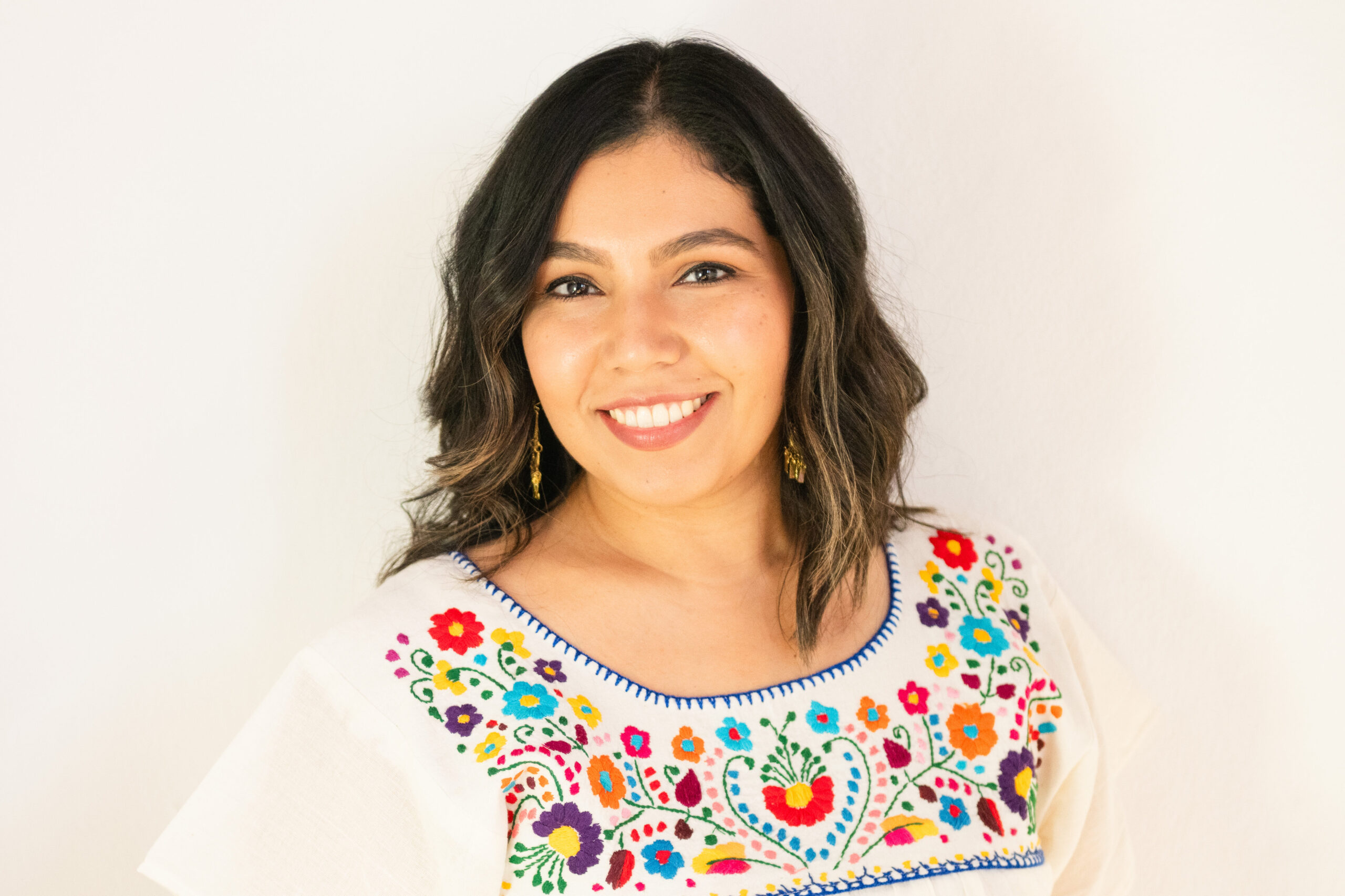
That moment stuck with me. So when I sat down with Nina Sanchez, co-founder of Viva Los Libros, for the Viva la Mami podcast, this conversation felt personal.
Why I Built a Bilingual Library for My Kids
Growing up on the Northwest side of Chicago, I remember the Golden Books. Every single one was in English. My parents didn’t have the time or resources to learn how to read with us. Plus, none of those books looked like us or spoke our language.
So when I became a mami, building a library that reflected who we are became a mission. As a Spanish-dominant mom, I also wanted books that sounded like the way we actually talk to our children.
The Gap in Bilingual Books for Kids
Nina started Viva Los Libros six years ago for the same reason many of us start things. She couldn’t find what she needed for her own child. In fact, her sister faced the same struggle 21 years earlier. Nina hoped the landscape would change by the time she became a mom. Unfortunately, it didn’t.
The numbers she shared stopped me in my tracks. According to Nina, less than 1% of books published in the US are bilingual. Also, children are more likely to find a book starring an animal than one featuring any child of color. For Latine kids, representation sits at just 7%.
Over six years, Nina and her team hosted book fairs, pop-ups, and literacy events in Chicago, Iowa, New Jersey, and Florida. Everywhere they went, parents and educators said the same thing. They were looking for books they couldn’t find. So Nina made a decision. If the books don’t exist, we’ll create them.
“Authentic to Whom?”
One of my favorite moments was when Nina challenged the idea of “authentic” books. Many parents ask for books from Latin America, hoping they’ll feel more culturally true. However, Nina explained that most Spanish children’s books are translated from European languages. That’s true even for books published in Mexico, Argentina, or Colombia.
This hit home for me. As bilingual, bicultural Latinas raised in the US, we don’t speak English and then switch to Spanish. Instead, we live in both at once. We are that third culture.
That’s why Viva Los Libros writes its stories in English and Spanish side by side. Rather than translating one into the other, the press gives both languages equal respect. As a result, kids can feel they belong in either language.
Somos: We Are, a Love Letter to Latine Kids
Nina’s first book, Somos: We Are, was born in the fall of 2025. At the time, federal law enforcement had flooded Chicago. Nina had just left her job as an executive director. Soon after, she joined rapid response efforts and set up a sanctuary team at her daughter’s school.
She watched children cry at drop-off. Some were terrified their parents wouldn’t come back to pick them up. So she sat down and wrote a bilingual book of affirmations. Her goal was simple. She wanted our kids to know they are loved, cared for, and so much more than a piece of paper.
The line that ties it all together gave me chills: somos aquí, somos allá, somos todo eso y mucho más. For every child living this pesadilla in a mixed-status household, this book is a hug.
How to Build a Library of Bilingual Books for Kids
When I asked Nina for advice, her answer was full of grace. First, focus on connection, not perfection. Reading together isn’t a grammar lesson. For example, when Nina didn’t know a word in Spanish, she looked it up with her daughter, Vida. Eventually, Vida started asking to look words up herself.
Second, you don’t have to buy every book. Many public libraries now carry more Spanish and bilingual books for kids. Also, programs like Dolly Parton’s Imagination Library mail free books to eligible families.
Finally, when you do buy, shop at independent Latine-owned bookstores. They know the authors, the translations, and the stories. Therefore, they can steer you away from books that clash with your values. Nina also suggests adding bilingual books to baby shower and primer cumpleaños wish lists.
And to anyone who says “Latinos don’t buy books,” Nina says the data proves otherwise. We buy as many books as anyone else. Imagine what happens when we choose intentionally where that money goes.
It Doesn’t Matter What Grade You Finished
The moment I’ll carry with me most is this one. Nina reminds every parent that formal schooling doesn’t define your impact. Talking with your child, reading a simple book, or walking to the library together all build literacy. Our parents and abuelos carried so much knowledge across borders, and that counts.
Now, as my kids grow up here in México, I notice how many children’s books still show caricatures and princesses who don’t look like them. It reminds me that the books we choose are a form of love. They are also a form of resistance.
Show Notes
In this episode, I sit down with my fellow Chicagoan Nina Sanchez, publisher and co-founder of ¡Viva! Los Libros, a bilingual children’s bookstore that’s now becoming a press. We talk about why less than 1% of books published in the US are bilingual, why “authentic” Spanish books aren’t always what they seem, and how Nina wrote her first book, Somos: We Are, as a love letter to Latine kids during one of the scariest seasons our community in Chicago has lived through. If you’ve ever struggled to find books that look and sound like your family, this conversation is for you.
What you’ll hear:
〰 Why the bilingual book gap still exists, and what the numbers say about representation for Latine kids
〰 The truth about translated books, and Nina’s question: “authentic to whom?
〰 How ¡Viva! Los Libros is writing stories in English and Spanish side by side, instead of translating one into the other
〰 The story behind Somos: We Are, a bilingual book of affirmations for Latine children
〰 Practical tips for building your child’s bilingual library, plus how Nina is redefining madrehood
Resources mentioned:
〰 ¡Viva! Los Libros website
〰 Instagram: @vivaloslibros_chi
〰 Somos: We Are by Nina Sanchez, illustrated by Addy Rivera Sonda
〰 Dolly Parton’s Imagination Library
About Our Guest

Nina Sanchez | Founder of ¡Viva! Los Libros
Nina Sánchez is the co-founder and publisher of ¡Viva! Los Libros, a Chicago bookstore and new press dedicated to bilingual children’s books. A second-generation Chicagoan with roots in Pilsen and a father from León, Guanajuato, Nina holds a Master of Arts in Latin American and Caribbean Studies from the University of Chicago. Her career has focused on equity, from college access to leadership development and arts and culture.
She founded ¡Viva! Los Libros in 2020, and the bookstore sells Spanish-language and bilingual children’s books inside Chicago’s Pilsen Arts & Community House, at pop-ups around the city, and through school book fairs in Illinois, Iowa, and New Jersey. This fall, Nina expanded into publishing with a new imprint. Rather than translating books after they’re written, the imprint develops every title in English and Spanish at the same time, focusing on board books, picture books, activity books, and early readers. Its debut title, Somos/We Are, is a dual-language board book for ages 2–5, written by Nina and illustrated by Addy Rivera Sonda.
Nina lives in Chicago with her husband and their daughter, Vida.